Falls are common in New Jersey.
CDC's 2020 BRFSS table reports that 25.6% of New Jersey adults 65+ had at least one fall in the past year.
The case for prevention
If someone you love is slowing down, avoiding stairs, or worrying about falling, the next step does not need to be dramatic. It needs to be specific.
Action BEFORE disability
The goal is not to frighten a family into action. The goal is to notice risk early enough that the home, the body, and the routine can still be adjusted.
Start the free screenIf you said yes to any of these, HomeStretch helps you stay safe, steady, and independent in the home you love.
The case for prevention
25.6%
of New Jersey adults 65+ reported at least one fall in 2020.
Source: CDC MMWR, BRFSS 2020
31.5
was New Jersey's age-adjusted fall-related death rate per 100,000 adults 65+ in 2021.
Source: CDC MMWR, National Vital Statistics System 2021
24%
lower fall rate was reported for multifactorial assessment and intervention programs.
Source: Cochrane Database of Systematic Reviews, 2012
No home visit can guarantee a fall will not happen. HomeStretch turns the evidence into practical next steps: hazards, movement, routines, physician sign-off, and follow-up support before a small warning sign becomes the whole plan.
What the numbers mean
CDC's 2020 BRFSS table reports that 25.6% of New Jersey adults 65+ had at least one fall in the past year.
CDC's 2021 National Vital Statistics table reports New Jersey's age-adjusted fall-related death rate for adults 65+ at 31.5 per 100,000.
A 2012 Cochrane review found multifactorial assessment and intervention programs reduced the rate of falls by about 24%.
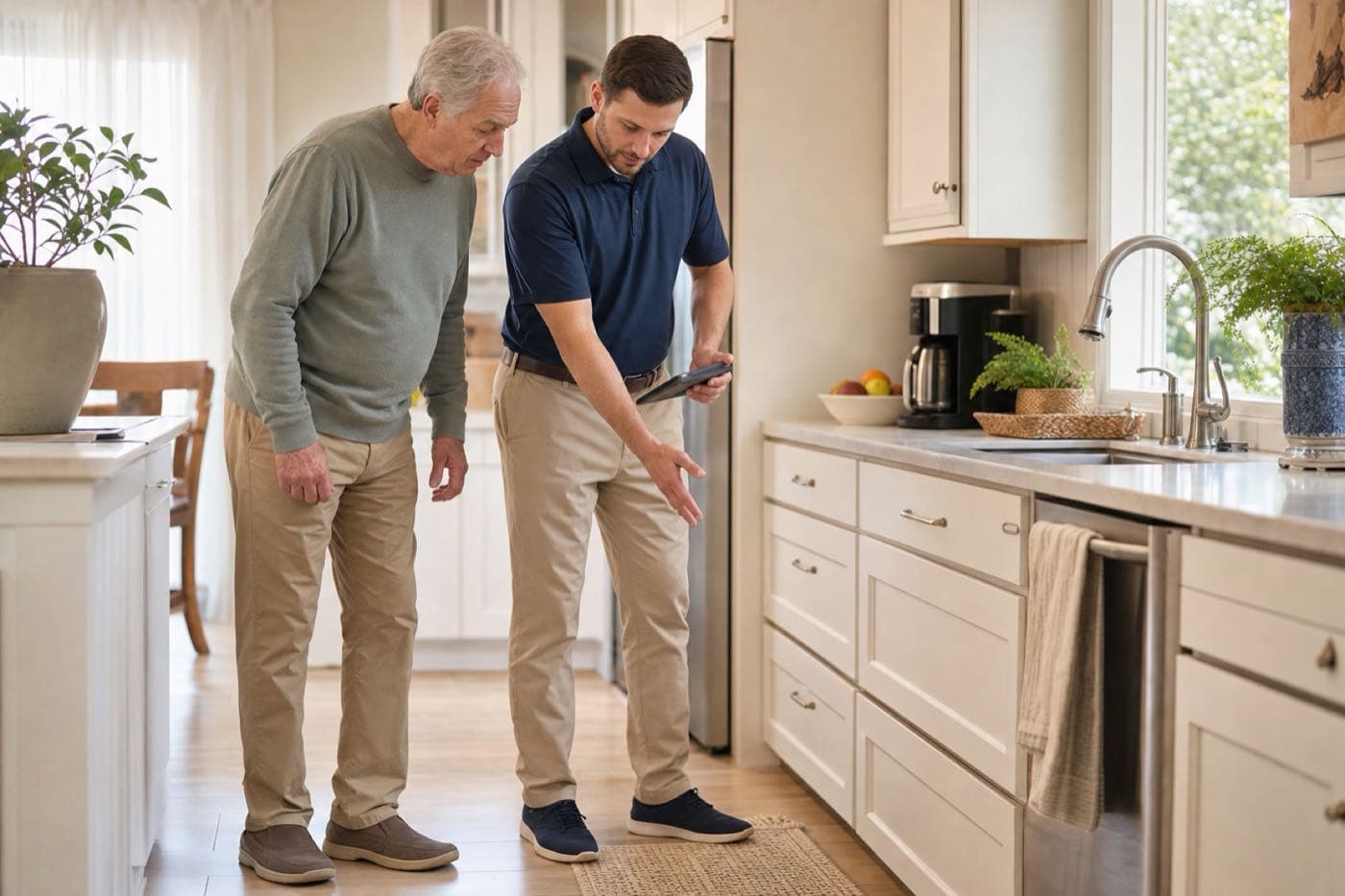
Photo illustration. Data sources: CDC BRFSS 2020, CDC National Vital Statistics System 2021, and Cochrane Database of Systematic Reviews 2012.
What HomeStretch evaluates
Lighting, stairs, thresholds, throw rugs, bathroom transfers, and grab-bar placement.
Balance, strength, endurance, fall-recovery technique, and functional daily movement.
Medication side effects, vision, cognition, mobility, and the routines that shape real risk.
Cost of acting early
$0
A first conversation about the home, the concern, and which service level fits.
$349
A focused evaluation, written modification scope, and one follow-up for equipment education.
$1249
Comprehensive evaluation plus three follow-up visits for movement, fall recovery, and home-safety support.
Rather than guessing at hospital costs, this page keeps the sourced fall data and HomeStretch service options visible before a family commits.
Start with the free home safety screen. HomeStretch can help you decide what deserves attention first.